Pharma-Plant and the Rise of Molecular Farming: How Plants Became Biopharmaceutical Production Platforms
Explore Pharma-Planta, molecular farming, plant-made pharmaceutical proteins, recombinant protein production, plant biotechnology and the future of plant-based biomanufacturing.
The Pharma-Planta Consortium represents an important chapter in the development of molecular farming and plant-based biomanufacturing. By exploring how genetically engineered plants could produce complex recombinant proteins, Pharma-Planta helped demonstrate the potential of plants as alternative biological production platforms. Today, interest in plant biotechnology, recombinant protein production, and plant-made pharmaceutical proteins continues to grow as researchers investigate new approaches to biological manufacturing.

What is Pharma-Plant?
The Pharma-Planta Consortium brought together researchers and organizations working across molecular biology, plant biotechnology, recombinant protein expression, biosafety, manufacturing and regulatory science.
Rather than treating plants only as agricultural organisms, the project explored their potential as sophisticated biological factories capable of producing valuable recombinant proteins.
This approach became closely associated with the broader field of molecular farming.
What Is Molecular Farming?
Molecular farming is a biotechnology approach in which genetically engineered plants are used to produce valuable recombinant molecules.
Through genetic engineering, researchers introduce selected genetic sequences into plant cells. The modified plants can then express specific proteins or other biological molecules.
Depending on the expression system, molecular farming can be investigated for the production of:
- Recombinant proteins
- Recombinant antibodies
- Enzymes
- Vaccine-related proteins
- Research reagents
- Other complex biological molecules
The concept creates an intersection between plant biotechnology, molecular biology and recombinant protein engineering.

Why Pharma-Planta Was Important for Molecular Farming
One of the major contributions of Pharma-Planta was its focus on developing an integrated pathway from scientific research toward controlled production and clinical evaluation.
The initiative brought together several areas that are essential for advancing plant-made pharmaceuticals, including:
Recombinant Protein Expression
Researchers investigated methods for increasing the production of recombinant proteins in genetically engineered plants.
Plant Biotechnology
Advanced plant transformation and expression technologies provided the biological foundation for molecular farming platforms.
Biosafety
Environmental risk assessment and containment considerations were important components of developing genetically modified plant production systems.
Manufacturing Standards
The project also addressed production quality and GMP-compliant manufacturing, helping connect plant biotechnology research with pharmaceutical manufacturing requirements.
Regulatory Science
Regulatory considerations were incorporated into the development process, demonstrating the importance of connecting molecular farming research with regulatory frameworks.
How Recombinant Protein Production in Plants Works
At a basic level, plant-based recombinant protein production begins with the selection of a gene encoding the desired protein.
Researchers introduce this genetic information into a suitable plant expression system. Once the genetic construct is expressed, plant cells use their natural cellular machinery to produce the recombinant protein.
The resulting material can then undergo downstream processing and purification.
A simplified workflow is:
Gene selection → Plant transformation → Protein expression → Harvest → Purification → Characterization → Quality evaluation
The precise workflow depends on the plant species, expression technology and recombinant molecule being produced.

Why Use Plants for Recombinant Protein Production?
Plants offer several characteristics that make them attractive research platforms for recombinant protein expression.
Scalable Biological Production
Plants can be cultivated at different scales, creating opportunities for investigating scalable recombinant protein production.
Flexible Expression Systems
Researchers can develop different plant expression strategies depending on the characteristics of the target protein.
Complex Protein Production
Plant cells possess eukaryotic cellular machinery that can support the expression and processing of many complex recombinant proteins.
Molecular Farming Innovation
Continuous advances in plant biotechnology are improving expression levels, protein quality, purification strategies and production control.
These characteristics have helped maintain interest in plant-based biomanufacturing.
Plant-Made Pharmaceutical Proteins and Modern Biotechnology
The development of plant-made pharmaceutical proteins is part of a wider movement toward alternative biological production platforms.
Traditional recombinant protein manufacturing can involve microbial systems or mammalian cell cultures. Molecular farming provides another research direction by using plants as biological production hosts.
Researchers continue to investigate plant expression systems for proteins requiring specific structural characteristics, scalable production and carefully controlled downstream processing.
The field therefore connects several important areas of biotechnology, including:
Plant biotechnology + genetic engineering + recombinant protein production + protein engineering + molecular farming
From Molecular Farming Research to Manufacturing
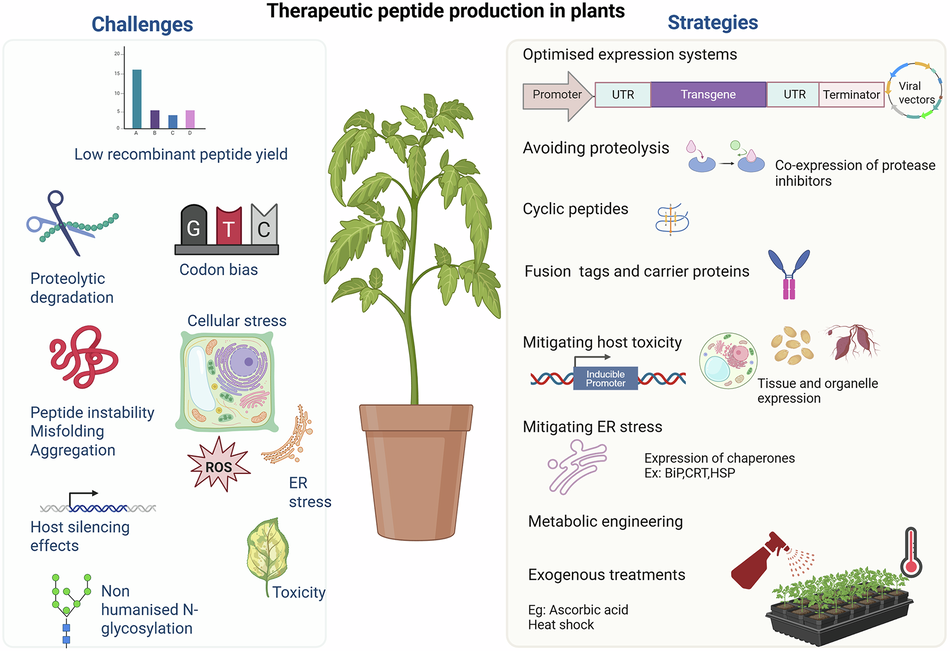
A major challenge in molecular farming is moving beyond successful protein expression toward reproducible, controlled and scalable manufacturing.
This requires consideration of:
- Expression consistency
- Protein characterization
- Purification
- Product quality
- Biosafety
- Environmental risk
- Manufacturing controls
- Regulatory requirements
The Pharma-Planta initiative is notable because it approached plant-based protein production as an integrated research and development process rather than focusing only on protein expression.
The Future of Plant-Based Biomanufacturing
Modern molecular farming continues to evolve alongside advances in synthetic biology, genome engineering, plant transformation and protein engineering.
New plant expression technologies are being investigated to improve protein yield, consistency and production efficiency.
Researchers are also exploring how molecular farming could contribute to the production of antibodies, enzymes, recombinant proteins and other biological molecules.
As biotechnology becomes increasingly focused on flexible and scalable manufacturing platforms, plant-based production systems remain an important area of scientific research.
Pharma-Planta's Scientific Legacy
The Pharma-Planta Consortium helped establish a valuable scientific framework for studying plant-made recombinant proteins and the challenges associated with translating molecular farming research into controlled production.
Its work brought together disciplines that are still central to plant-based biomanufacturing today:
- Molecular farming
- Plant biotechnology
- Recombinant protein expression
- Protein engineering
- Biosafety
- Regulatory science
- GMP manufacturing
- Molecular biology
The project therefore provides an important historical reference point for researchers interested in the evolution of plant-made pharmaceuticals and recombinant protein production in plants.
Frequently Asked Questions About Pharma-Planta
What is Pharma-Planta?
Pharma-Planta was a European collaborative research initiative focused on developing genetically engineered plants as production platforms for recombinant pharmaceutical proteins.
What is molecular farming?
Molecular farming is the use of plants to produce valuable recombinant molecules through genetic engineering and controlled protein expression systems.
What are plant-made pharmaceutical proteins?
Plant-made pharmaceutical proteins are recombinant proteins produced using genetically engineered plants as biological production platforms.
Why are plants used for recombinant protein production?
Plants offer scalable cultivation, flexible expression systems and biological machinery capable of producing many types of recombinant proteins.
Is Pharma-Planta related to plant biotechnology?
Yes. Pharma-Planta brought together plant biotechnology, molecular biology, recombinant protein engineering, biosafety and manufacturing research.
What is the future of molecular farming?
Current research is exploring improved plant expression systems, synthetic biology, genome engineering and scalable plant-based biomanufacturing for recombinant proteins and other biological molecules.
Conclusion
The Pharma-Planta Consortium represents an important milestone in the development of molecular farming and plant-based recombinant protein production.
By combining plant biotechnology with recombinant protein engineering, biosafety, manufacturing and regulatory research, Pharma-Planta demonstrated how genetically engineered plants could be investigated as advanced biological production platforms.
Today, molecular farming continues to develop as researchers explore new plant expression systems, recombinant proteins, plant-made pharmaceutical proteins and plant-based biomanufacturing technologies.
For the biotechnology community, the legacy of Pharma-Planta illustrates how innovative plant science can contribute to the development of new approaches to recombinant protein production.